Solar MCCB and MCB Switches: Protecting Renewable Energy Systems With the Right Circuit Breaker
India's solar energy sector is experiencing extraordinary growth, with ambitious government targets and falling installation costs driving rapid expansion of both utility-scale solar farms and commercial rooftop systems. This growth has created significant demand for circuit protection devices that are specifically designed for the unique electrical characteristics of photovoltaic systems. Two of the most important protective devices in any solar PV installation are the solar MCCB and the MCB switches. Understanding why standard AC circuit breakers are not always suitable for solar applications, and what makes these specialized products necessary, is essential knowledge for engineers, contractors, and developers working in the renewable energy sector. Lauritz Knudsen Electrical & Automation offers Solar MCCB as part of its portfolio of power distribution solutions.
Why Solar PV Circuits Require Specialized Protection
Solar photovoltaic systems generate direct current (DC) from the PV panels, which is then converted to AC by the inverter before feeding into the building's electrical system or the utility grid. The DC side of the installation presents very different protection challenges from the AC side. In AC systems, the electrical current naturally passes through zero twice every cycle, which helps extinguish any electrical arc formed when circuit breaker contacts separate during a fault. In DC circuits, there is no natural zero crossing. The arc formed when a MCCB interrupts a DC fault current persists until the arc chamber design forces it to elongate, cool, and extinguish. This requires a specifically designed arc interruption system that is not present in standard AC circuit breakers.
What Is a Solar MCCB?
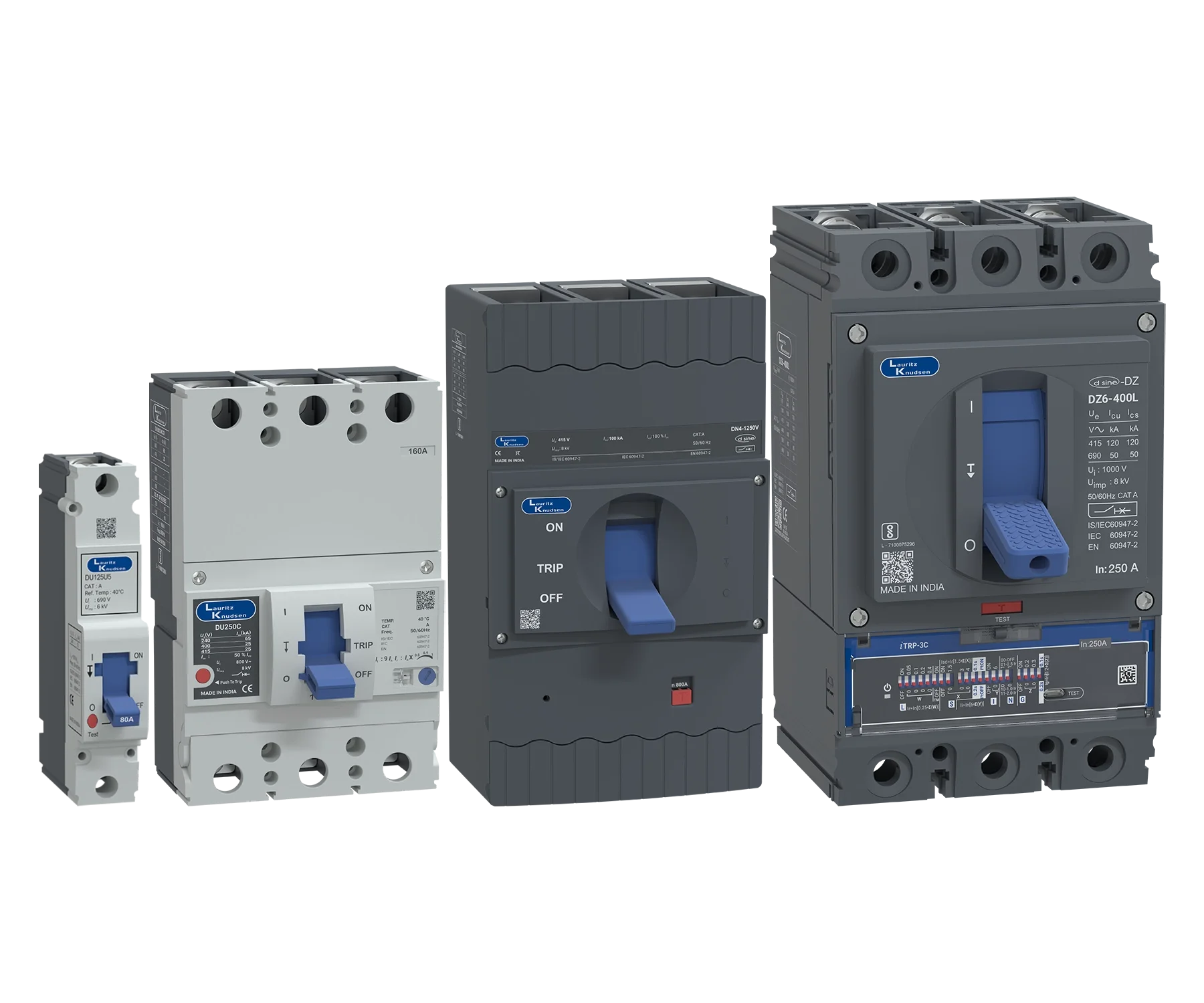
A solar MCCB is a Moulded Case Circuit Breaker that has been specifically engineered for use in photovoltaic DC circuits. Its arc interruption system is designed and rated for DC voltages up to 1000V DC or 1500V DC, which are the voltage levels found in modern large-scale solar PV string circuits and array combiner boxes. Using a standard AC-rated MCCB in a DC solar circuit creates a serious safety risk because the AC device's arc interruption capability is inadequate for the DC voltage levels involved, and it may fail to clear a fault safely, posing a risk of sustained arcing, fire, and equipment destruction.
The solar MCCB also features bidirectional current capability, because solar PV circuits can experience current flow in either direction under certain fault or shading conditions. Its construction uses materials and coatings specifically chosen to withstand the UV radiation, humidity, and temperature cycling experienced in outdoor solar installations. These features collectively make the solar MCCB the only safe and compliant choice for DC side circuit protection in solar PV arrays. Lauritz Knudsen Electrical & Automation includes Solar MCCB in its power distribution product portfolio, recognizing the growing importance of solar protection in India's rapidly expanding renewable energy sector.
Key Technical Specifications of Solar MCCB
The most critical specifications to verify when selecting a solar MCCB are the DC voltage rating, the DC breaking capacity, and the current rating range relative to the maximum string or array current. The voltage rating must match or exceed the maximum DC open-circuit voltage of the PV string or array being protected. The breaking capacity must exceed the maximum fault current available at the point of installation, which depends on the number of parallel strings. Environmental ratings including IP protection class and UV resistance rating should be verified against the conditions of the specific installation site.
The Role of MCB Switches in Solar PV Systems
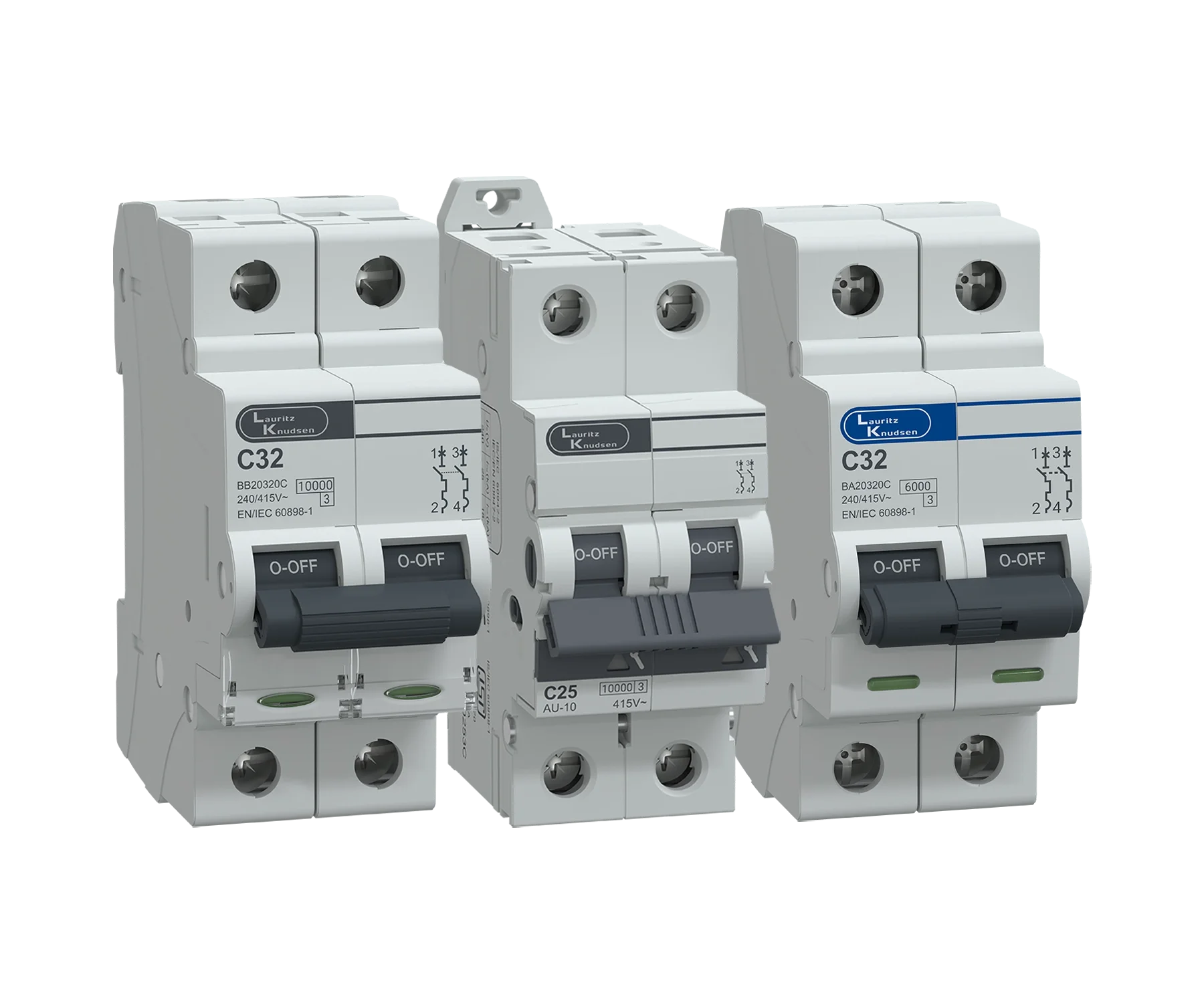
MCB switches, or Miniature Circuit Breakers, are primarily used on the AC output side of solar inverters, protecting the circuits that distribute inverter output to the loads or utility connection point. MCB switches provide standard overcurrent protection for these AC circuits, which behave identically to any other AC circuit and can therefore be protected by conventional AC-rated devices. The MCB switches used in solar AC distribution should be selected with attention to the rated output current of the inverter, the ambient temperature of the enclosure (which affects current rating), and the appropriate tripping characteristic for inverter output circuits, which is typically Type C.
For residential and small commercial solar systems, the MCB switches protecting the inverter AC output circuit are often installed in the existing consumer unit or main distribution board alongside the circuit breakers protecting other household or building circuits. For larger commercial systems, a dedicated solar AC distribution board may be provided, with MCB switches protecting individual inverter output circuits and a main solar MCCB protecting the combined output feeder to the main switchboard.
System Design Approach
A complete solar PV protection scheme places the solar MCCB on the DC side in string combiner boxes and at the DC input of each inverter, providing protection against faults in the PV array wiring and within the inverter itself. After the inverter, MCB switches in the AC distribution board protect the output circuits carrying the converted AC power. This two-level approach, with the solar MCCB handling the demanding DC protection requirements and the MCB switches providing conventional AC circuit protection, creates a complete, standards-compliant protection scheme from panel to grid connection point.
Conclusion
The solar MCCB and MCB switches are both essential to a safe and reliable solar PV electrical system. The solar MCCB addresses the specific and demanding challenge of DC circuit protection at the voltages found in modern PV arrays, while MCB switches provide familiar and reliable protection on the AC side of the system. As India's solar energy sector continues its remarkable growth, specifying the correct protection devices for both the DC and AC sections of solar installations is a non-negotiable requirement of responsible engineering practice. Lauritz Knudsen Electrical & Automation, with Solar MCCB in its product range, provides engineers and developers with the trusted protection solutions needed for solar installations of all scales.
Comments